
Doodles come in every size color and pattern that poodles come in.
Black(silver), apricot (cream to deep red), chocolate (dark or light which may fade to parchment or lavender)
solid– (below) are one color and may have a bit if random white on toes or chest.
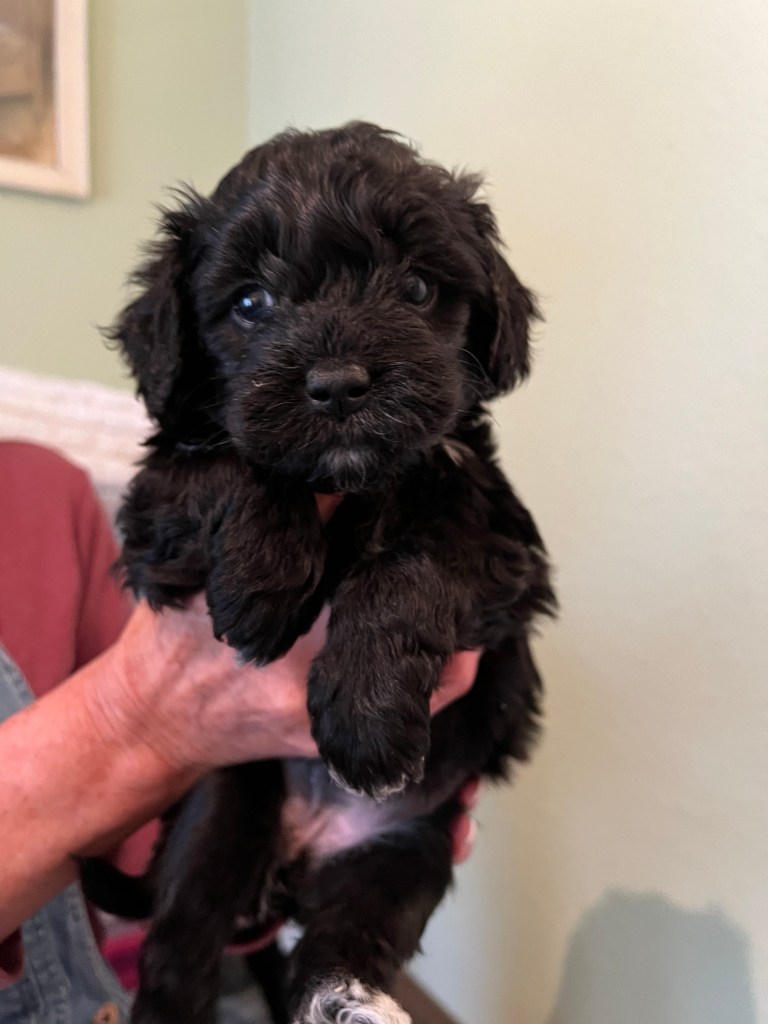
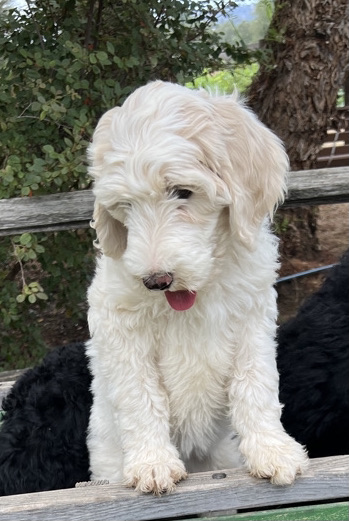
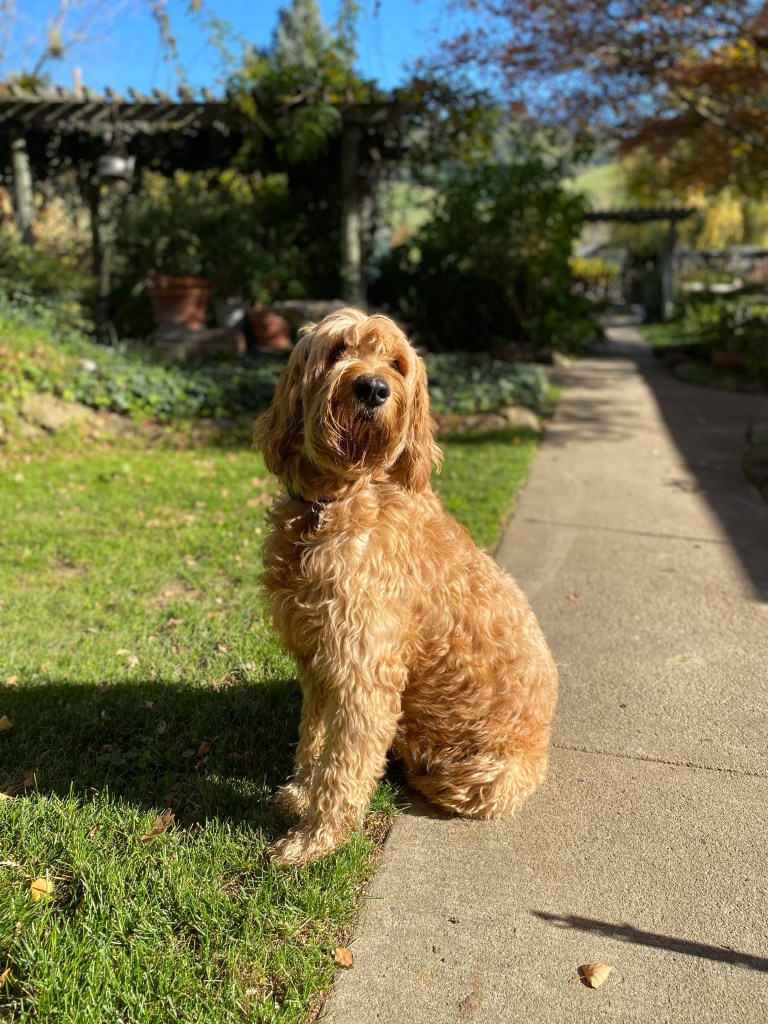
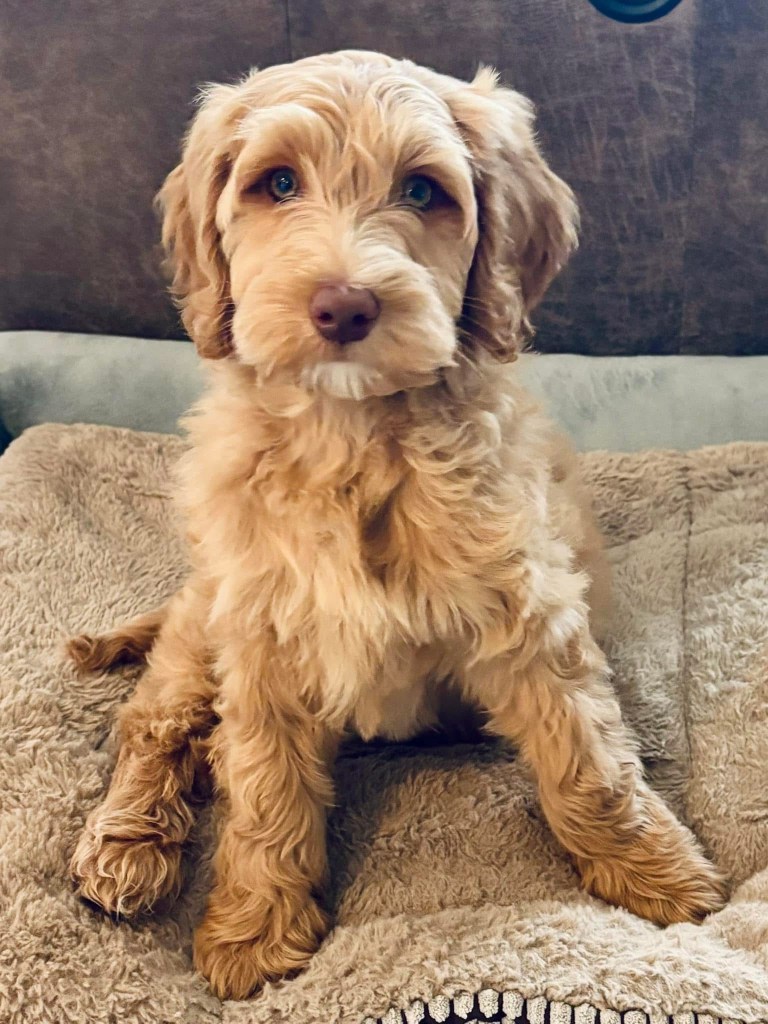
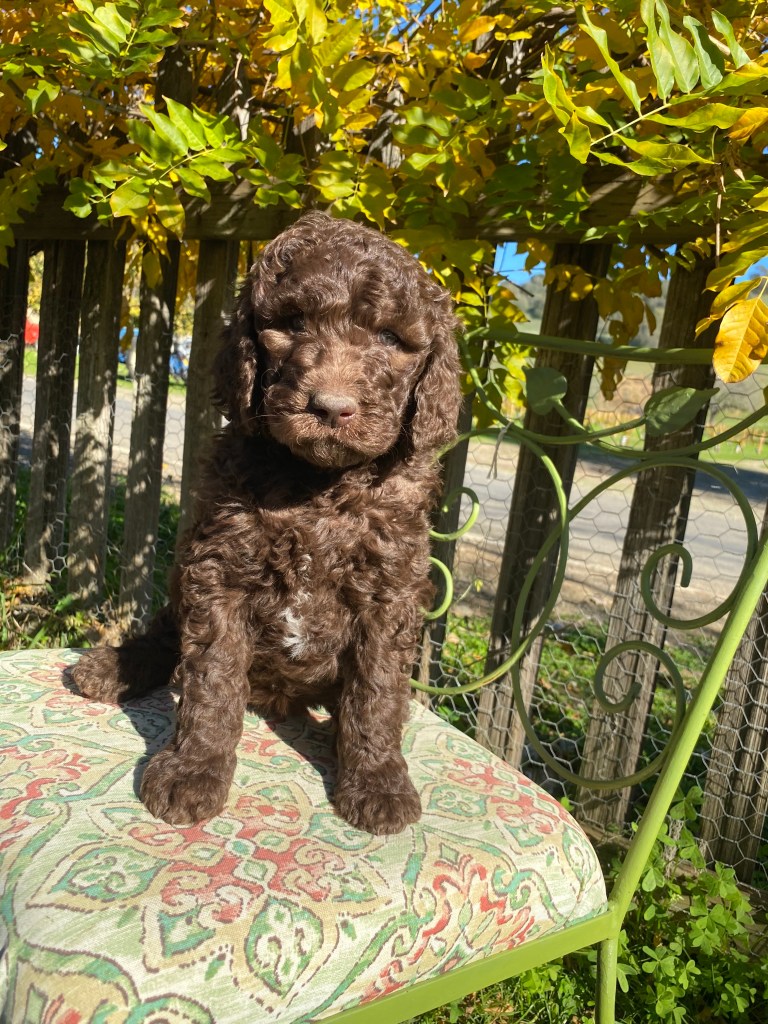
Abstract Markings abstract patch of white on chest, feet , head or tip of tail. this most often happens when one parent is a solid and the other is a parti. There are variations that include more or less white and in specific areas.
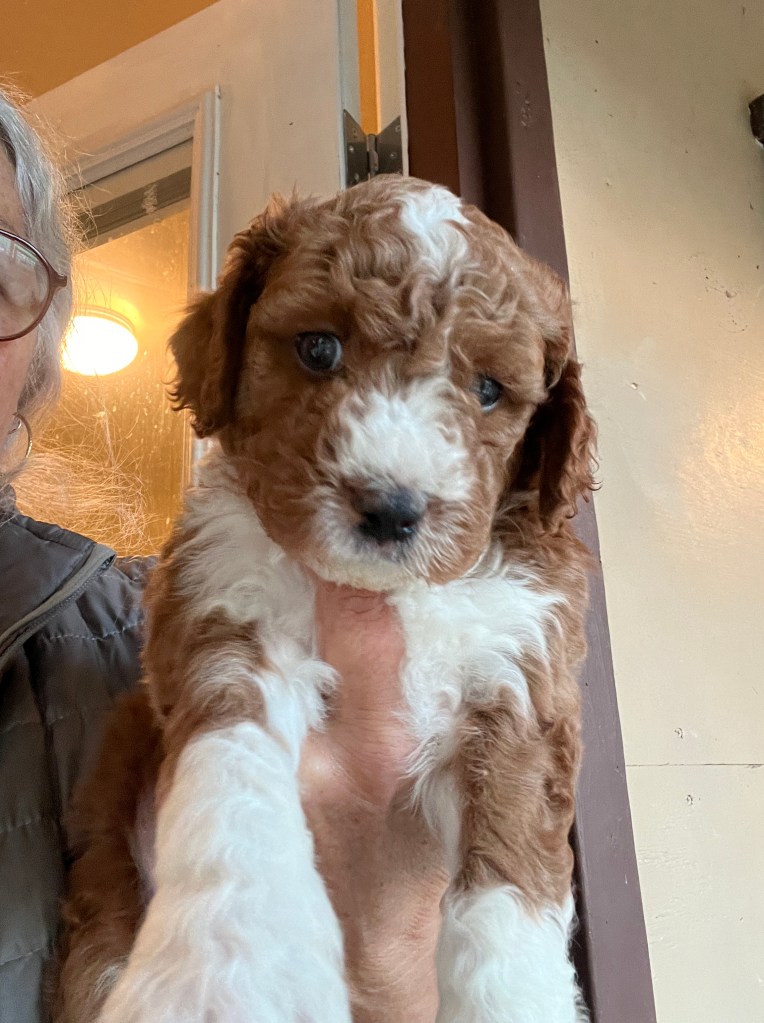
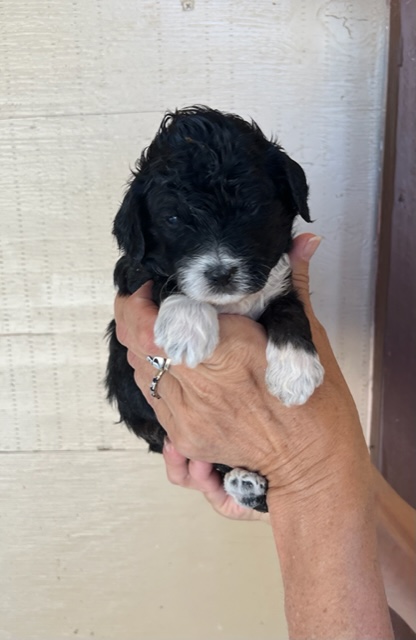

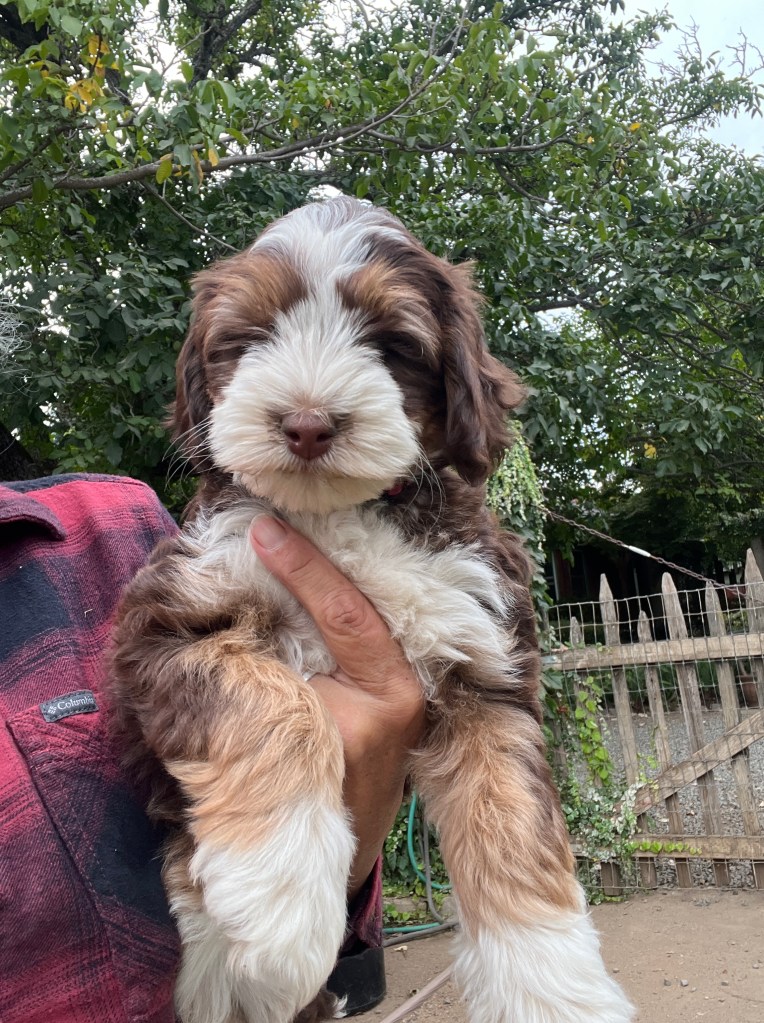
Parti-(below) are usually 50% or more white with big areas of any other color
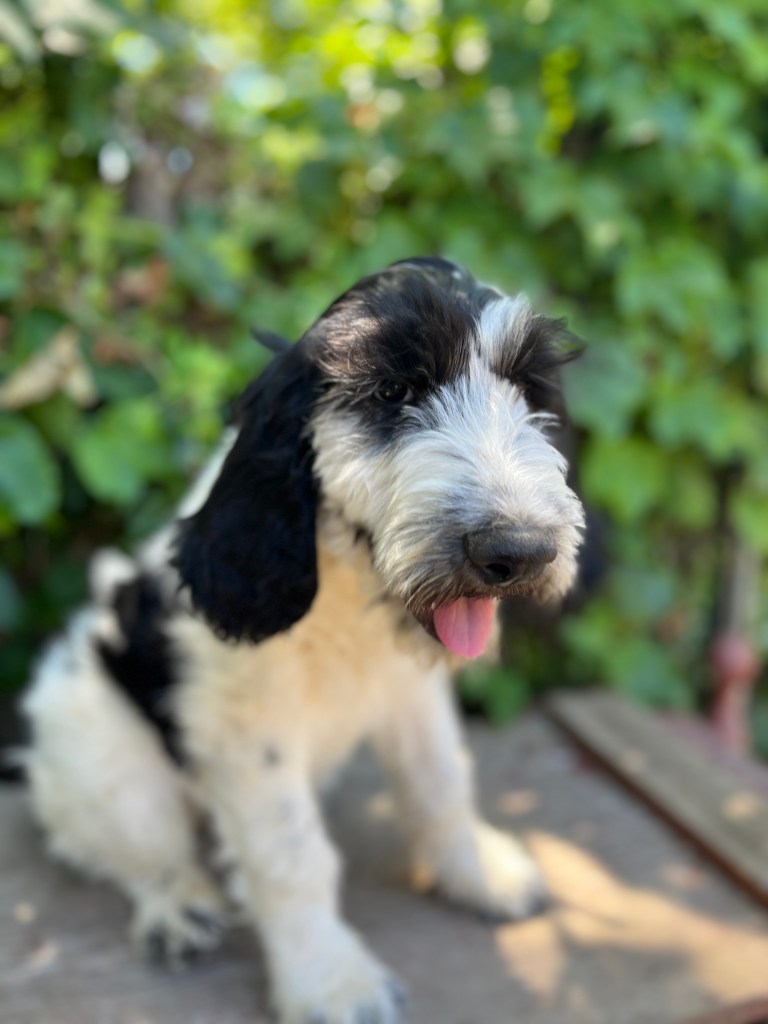
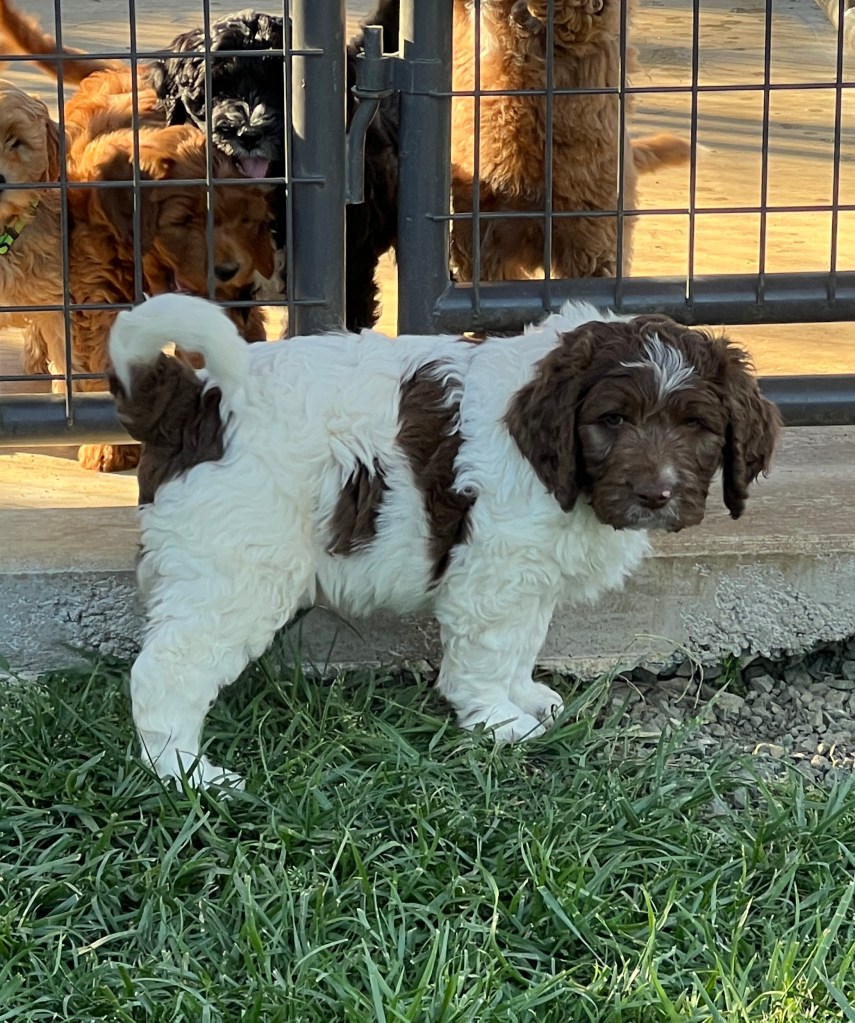
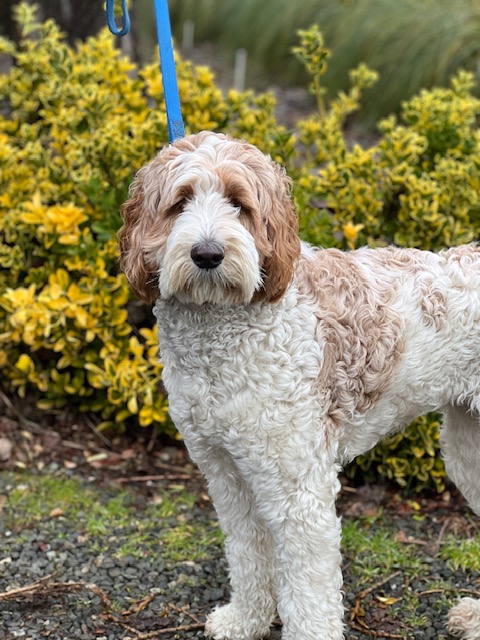
Other Patterns ( below )include Phantom (aka tri or black and tan, tan point) these are specific tan markings: lower 1/2 of the legs, chest, eyebrows, cheeks and under the tail.This can be on a black dog or a chocolate dog. The third picture is also combined with abstract markings (white paws, chest and face)
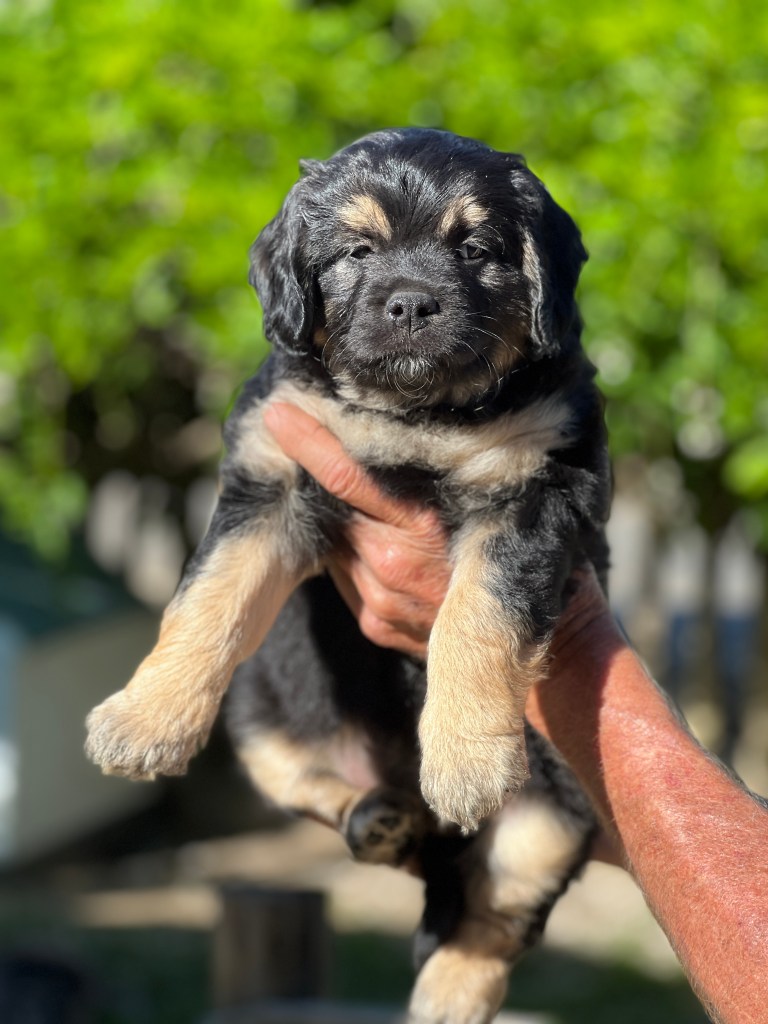
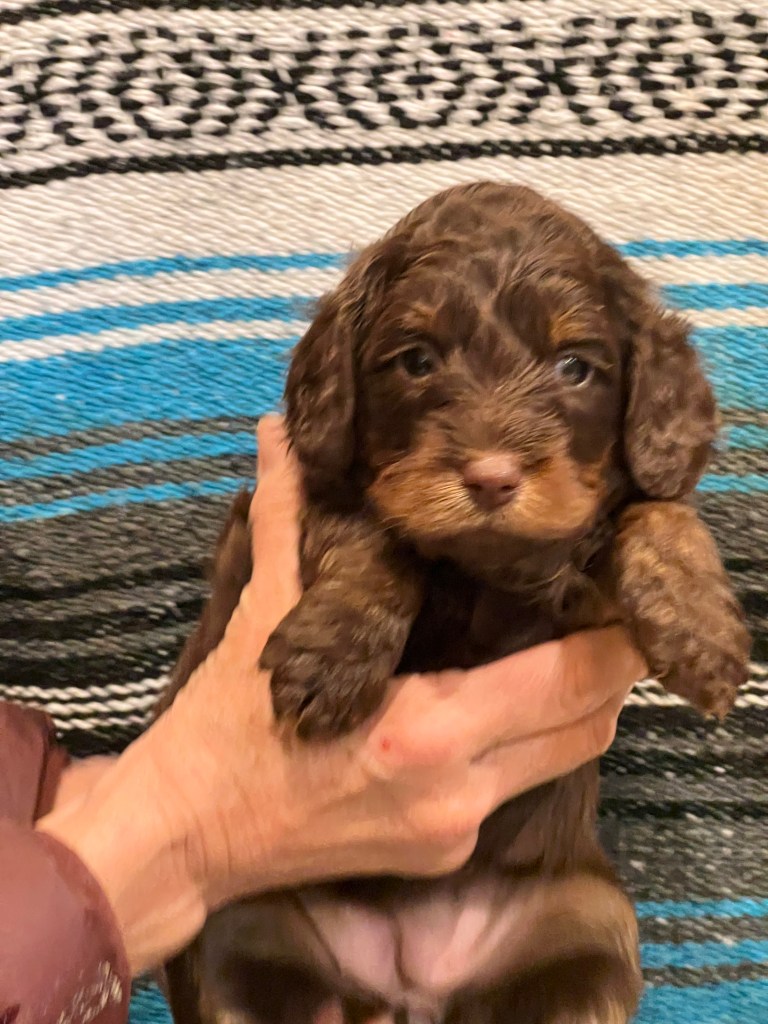
Merle ( Black, chocolate or Blue). Merling is caused by a gene that bleaches out random areas of color. The merle gene is a tricky gene and caution is taken when breeding dogs that carry merle. Blue eyes are common in merle dogs.

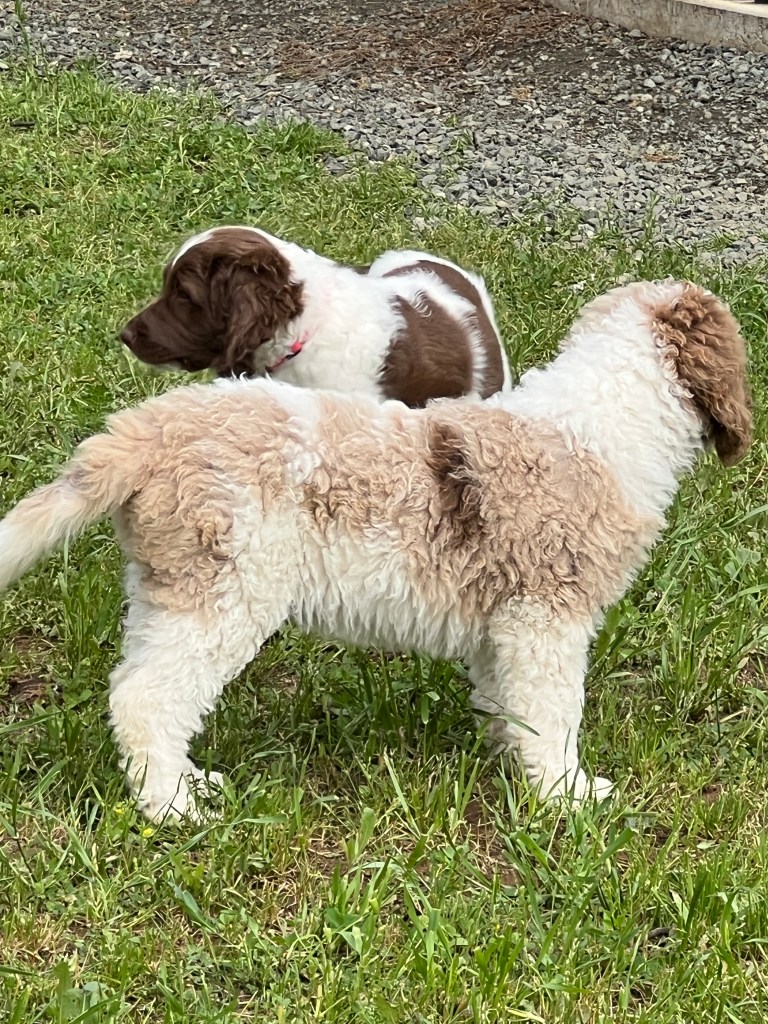
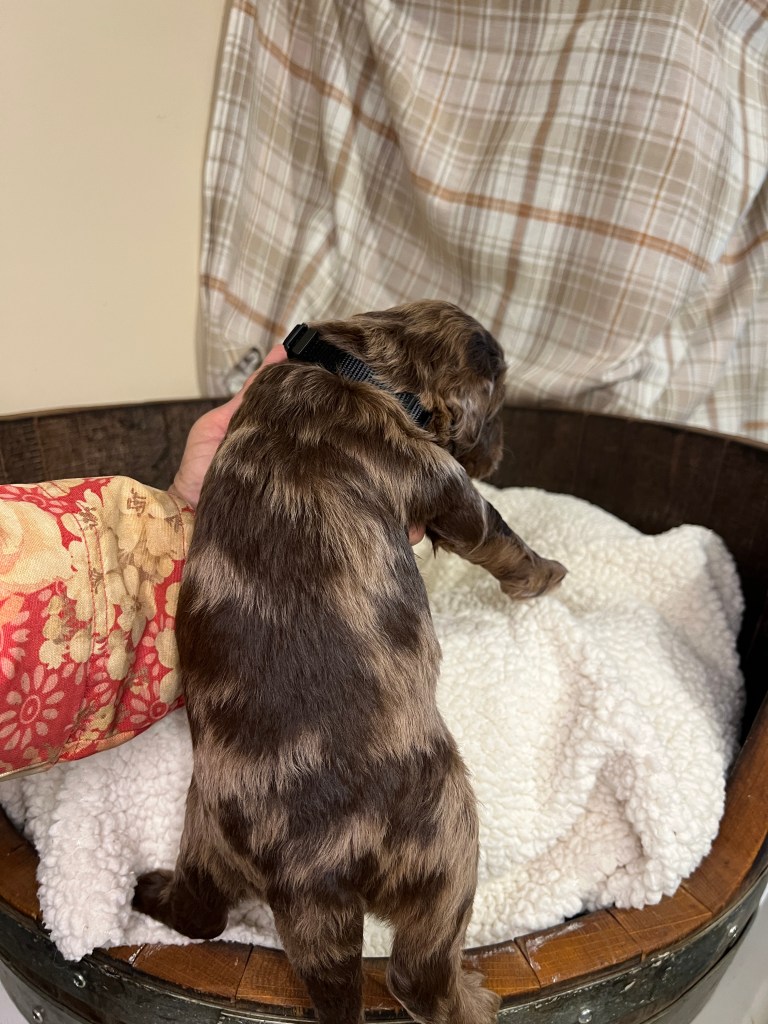

Below are Jumping Jack Flash- he is a gorgeous example of both Phantom and Merle . The puppy below is Pink Martini . Martini is a Phantom Merle Parti. Both are Standard Poodles.
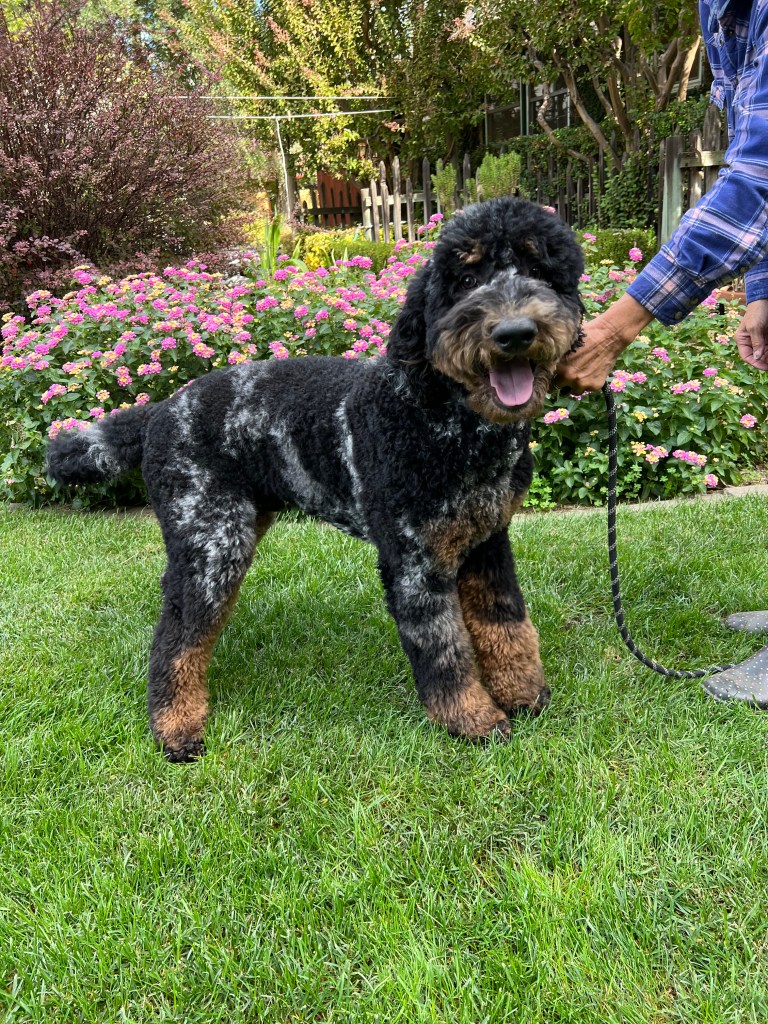

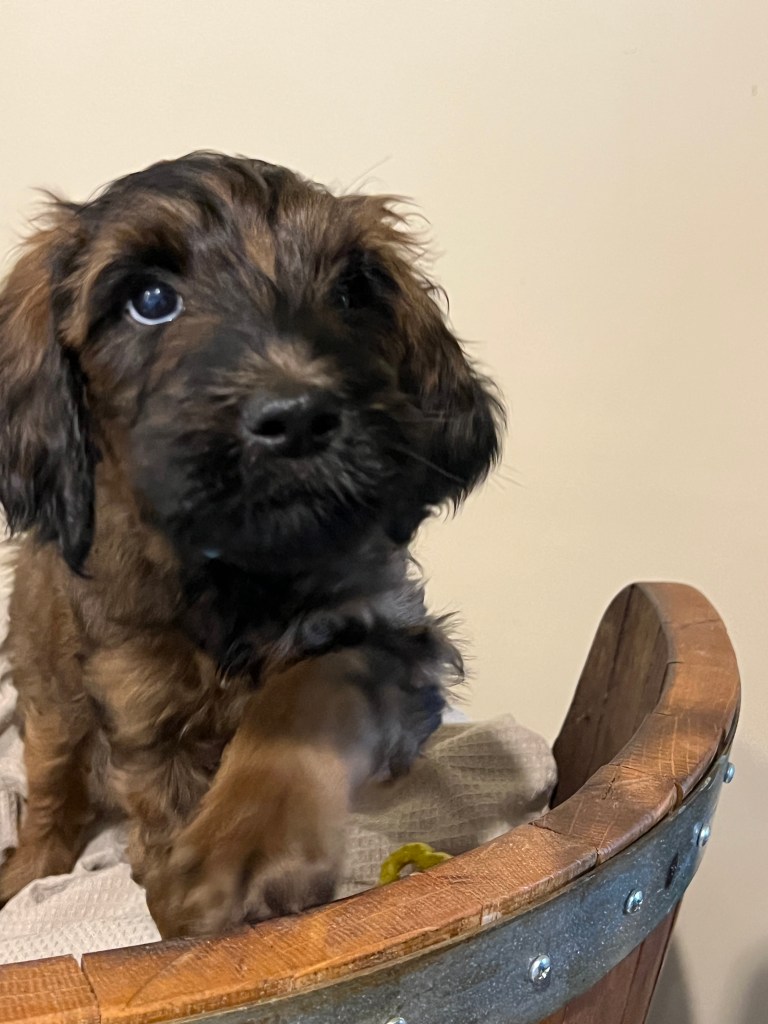
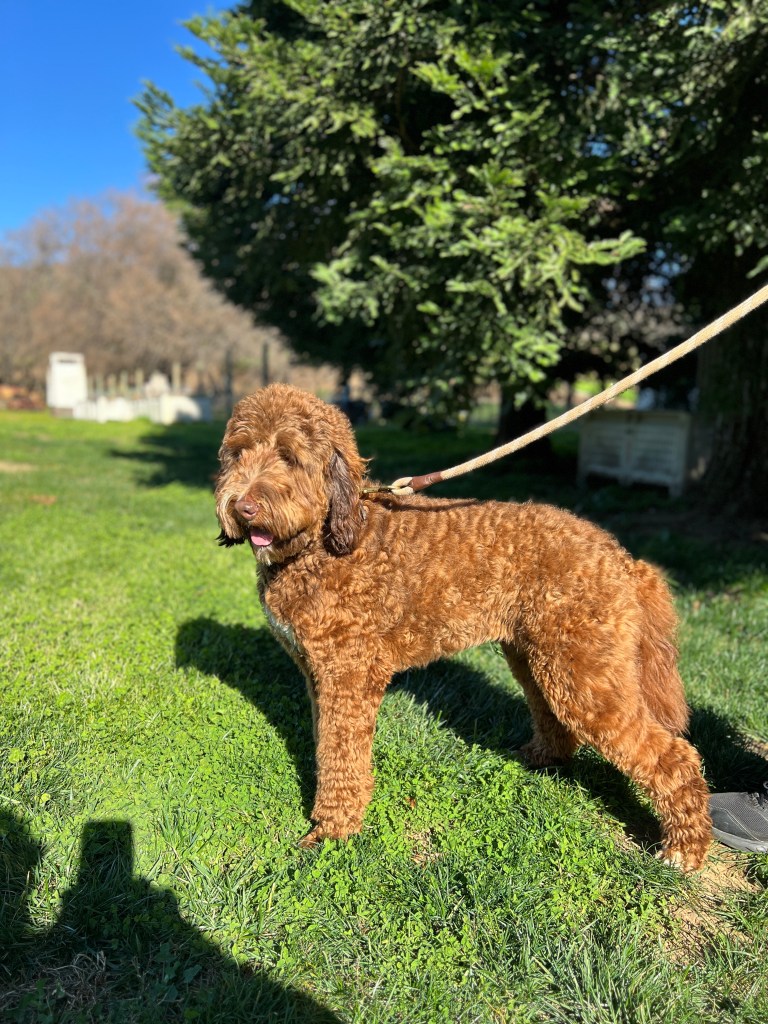
Sable (sables have darker edges and have more then one color on an individual hair) in this example Bruno The full grown dog has darker tips on hair especially around the edges of his ears and tail. A typical example of a sable dog is a German Shepard, with light hair that has black tips, and muzzle and ears and tail are also darker.
Generations and Sizes
The Labradoodle breed originated in Australia in the 70’s with a purposeful cross of a Labrador Retriever and a Standard Poodle, (plus a bit of spaniel )in search of a low allergy Guide Dog. The combination produced dogs with the friendly, easygoing personality of the Labrador, the intelligence of the poodle, in a allergy friendly and low shedding all in one! all that and the bonus of a lack of that “doggy smell”. Later miniature poodles were introduced to the mix and the result is a variation in sizes Standard, Medium and Miniature.
The “American labradoodle is strictly a cross of Labrador retriever and Poodle. While the Australian Labradoodle has some spaniel also added to the mix , somewhere along the line. The Australian Labradoodle (ALD) usually is thicker boned than it’s American counterpart.*
Labradoodles are known for their carefree tossled and have strong front limbs. Their coat can be anywhere from slightly wavy to curly and should be 2 to 4 inches long but will grow longer. They come in a variety of colors and color patterns They have outstanding intelligence and are highly trainable. Labradoodles make terrific family dogs.
Golden doodles came about with the cross of a Golden Retriever and a Poodle during the 90’s. The gentle friendly nature of the Golden Retriever makes a golden doodle a wonderful family pet with low shedding and allergy friendly traits. Golden doodle characteristics are similar to that of the Labradoodle. They tend to be red, apricot, golden, cream, with the possibility of white cream and Parti markings. But like the Labradoodle, the Goldendoodle can come in any color or size.
The crosses that produce both Labradoodles and Goldendoodles result in hybrid vigor. This is a phenomenon that occurs with the first cross of two unrelated purebred lines. It results in the off spring being stronger and healthier than either parent line. This occurs because the parents are unlikely to carry the same genetic weaknesses.
These crosses have produced wonderful intelligent and very popular pets. So much so, that one can find a myriad of “Doodle” crosses in all price ranges and all sizes. No matter where you get your new family member, be sure that the parents have been x-rayed, health tested and certified. Avoid the heartbreak and expense of a beloved family pet that has inherited health issues or bad joints from untested parents. A reputable breeder will have certifications and test results available and will not breed a dog that can produce a less than top quality puppy for you to love.
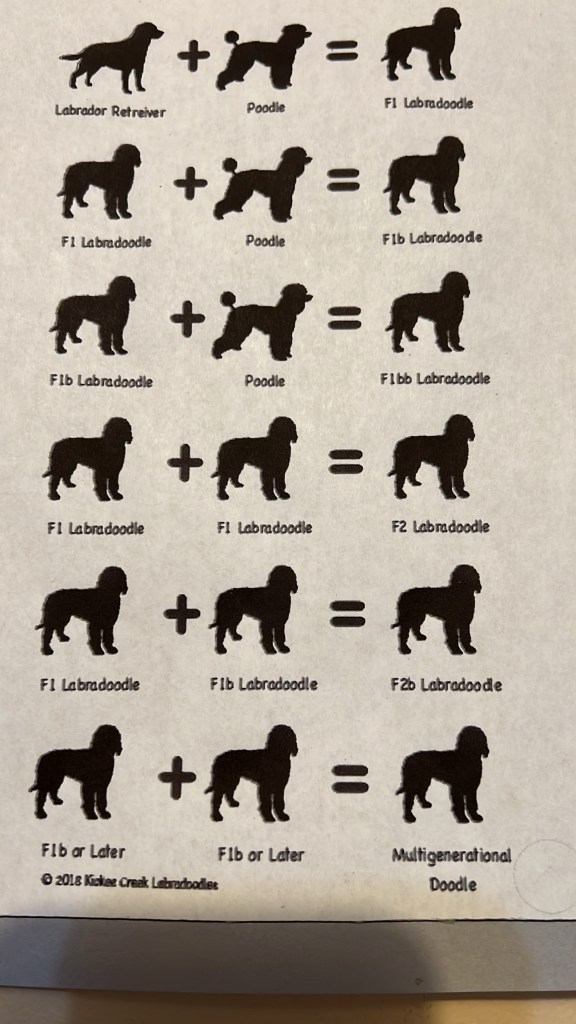
Labradoodle or Goldendoodle generations and coat traits
F1 -Labrador retriever (or Golden Retriever) X Poodle, first generation 50% each parent. The coat can be straight or wavy. Their allergy friendliness and shedding can vary widely. First generation, while they may have nice soft coats, ALWAYS carry a gene for Incorrect Coat(IC/furnishings they will have facial hair and the longer softer coat. They will be light shedders.
F1B -F1 Doodle X Poodle 75% Poodle, 25% lab or (golden). F1B will have a wavy, curly or wooly coat that is low to non shedding and are very allergy friendly.
F1BB– F1B X Poodle 87.5% poodle 12.5% labrador. Technically a doodle, but mostly poodle with most likely very curly hair.
F2- Is an F1 X F1. The chances of puppies with the appearance of just poodle or just retriever only are very high,(25% of either). So an F2 golden doodle may have the coat of a golden retriever and the slightness of bone like a poodle. And will shed like a golden retriever. Thus defeating the purpose of the Doodle hybrid, those that inherit the incorrect coat gene from each of their parents WILL NOT have a hypoallergenic coat. Conversely there can be fully furnished puppies with curly poodle coats in the same litter and some in between
F2B- ids an F1 X F1B. Some of these puppies will have curl and some will be wavy to straight. They will be about 62.5% Poodle. Some will inherit both furnishings genes , some will inherit one and some will not be furnished at all IF the F1B parent carries an incorrect coat gene.
Multigenerational- This is an F1B bred to an F1B or multigen. Or a multigen X multigen, a multigen X F1 or f1B, Multigens will have a fleecy a wavy to curly or wool coat. They should be low to non-shedding and allergy friendly. Their % of poodle can range from about 60 to 90(+/-) or more. Most mini’s and micros will be Multigenerational as it will take a few breedings to get to the small size from standard size of the golden retreiver or Labrador ancestor.
Australian Labradoodle will carry a small percentage of Spaniel. (Not to be confused with the Aussie Doodle which is a cross of Australian Sheepdog and Poodle- a much higher energy doodle).
Double Doodle-two different doodles (i.e. Labradoodle X Goldendoodle)
** A Short Disclaimer about Genetics and percentages. Genetics are not simple math, the percentages given above are approximations, they are dependent on what genes each offspring receive from their parents. Each of our parent dogs has a full DNA profile. We use this information to help us determine which dogs to breed to produce not only healthy pups, but also puppies with size, the coat color and texture that our customers want. However, we cannot guarantee traits or exact sizes.

SIZES – A dog’s height is measured at the tallest point of its shoulder. Officially size is determined by the height of the dog, as weights can vary.
Standard – 21-24 inches or more usually weighing 45+ pounds
Medium – >17-21 inches tall usually weighing 30 -40 pounds
Miniature ->14-17 inches tall with a weight generally under 30 pounds
Micro – 10-14 inches with a weight of approximately 10-20 pounds
And then there is the other extreme…
Giants – 25 inches or taller with weights are generally in the 85 to 100+ lbs
Our Newfy doodles (or newfypoos ) would be in the giant size ranges are are some of our Poodle Studs


Rigby and our up and coming Twin Sister’s Belle of the Ball. Belle is the daughter of Eleanor and Baloo (Poodle). Belle will have her first litter in 2025. Belle is a bit more petite at only 65 pounds and 24 ” at the shoulder.
 Twin Sisters Doodles